Twelve pattern and color combinations, and where each one suits
Updated November 10, 2026 · DFW Stone & Concrete
How to read them: the first part is the surface (a stamp pattern, a stone, an exposed finish), the second is the color method (hardener and release, integral, stain) and the third is the sealer where it matters. The pattern guide describes each stamp, the color guide explains the methods, and the sealing guide covers gloss and grit.
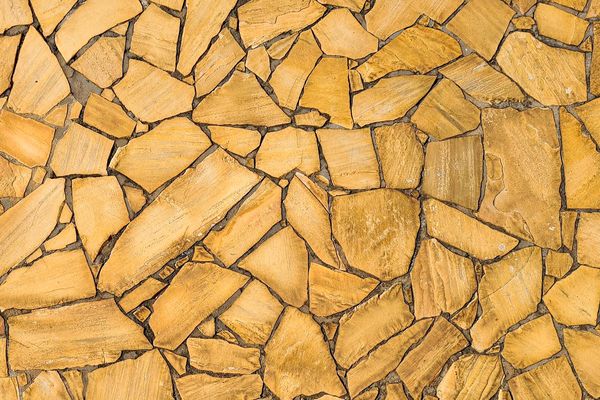
Ashlar slate · buff base · walnut release
A formal patio or front entry on a brick or stone house; the staggered cut-stone layout takes control joints in its grout lines, and the warm two-tone reads like Texas sandstone.
Random fieldstone · sand base · charcoal release
An informal backyard around a fire pit, on curves and odd shapes; the heavy texture hides surface flaws and the dark release settles in the low spots.
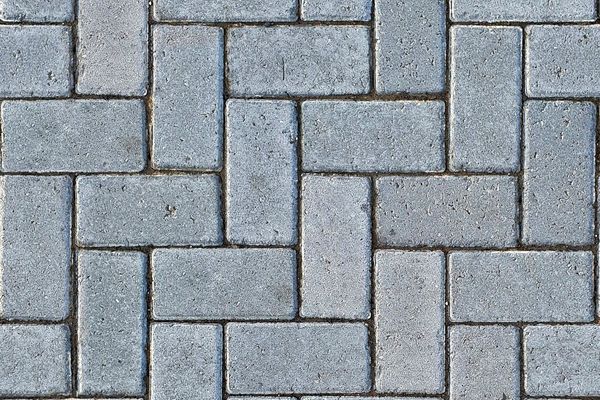
Herringbone brick · terracotta base · charcoal release
A walk, an apron or a border on a brick house; brick lines take the joints and the pattern stays crisp in a small area where a big stone would not fit.
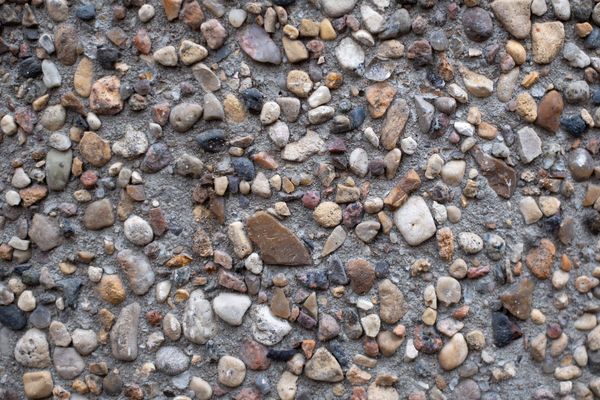
Seeded exposed aggregate · small rounded pebble · natural grey
A pool surround or a long walk where grip matters; shallow exposure of a small rounded stone stays comfortable under bare feet and does not glare.
Exposed aggregate · crushed granite · integral tan
A driveway apron or a courtyard with a modern house; the integral color warms the paste between the stones so the surface reads as one tone.
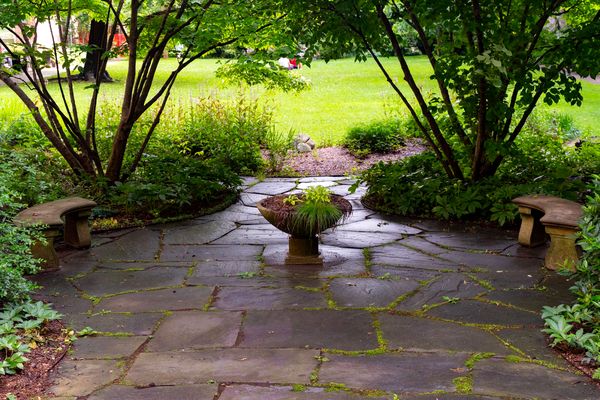
Dry-laid bluestone · cut rectangles · tight polymeric joints
A formal terrace on a lot with big trees; the stone floats on a deep compacted base, moves with the roots, and any piece can be lifted and reset.
Dry-laid Oklahoma sandstone · irregular · wide gravel joints
A garden path or a terrace that steps down a slope; buff and chocolate tones match the native stone on many DFW houses and the wide joints drain.
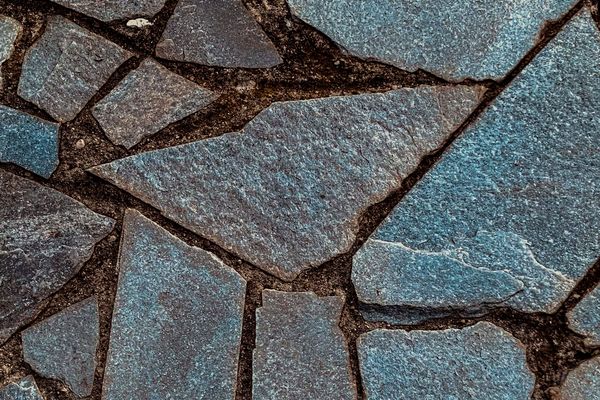
Acid stain over an existing slab · amber and slate blue
A sound but plain patio you want to keep; the reaction mottles differently on every slab, so approve a test patch in a corner first.
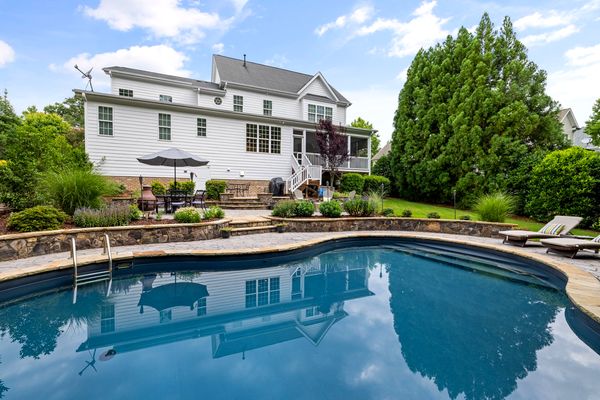
Seamless texture · pale sand hardener · matte sealer with grit
A pool deck in full sun; the light color stays cooler, the texture grips wet, and the matte sealer does not glare off the water.
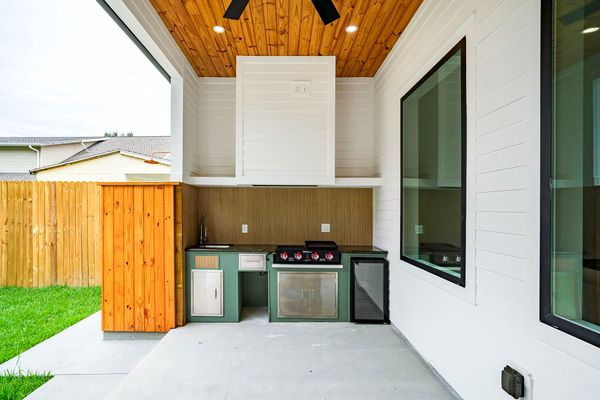
Smooth broom field · light integral color · stone-veneered island base
An outdoor kitchen patio; the plain field lets the island, the seat wall and the countertop carry the design, and the broom grips in the wet zone by the sink.
Fire pit terrace · fieldstone stamp field · plain-band border
A fire feature on a terrace with a seat wall; the border takes the saw cut, the field hides traffic, and the wall and cap match the stamp's stone tones.
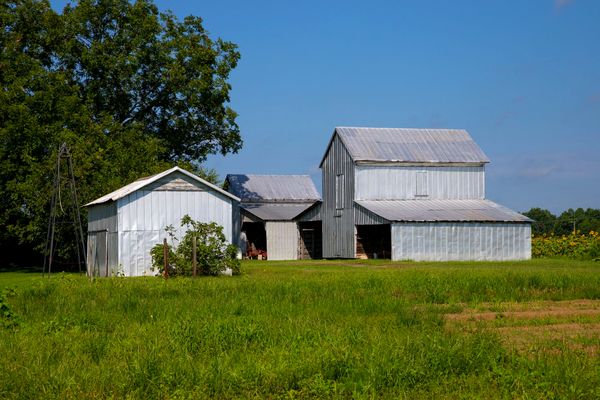
Shop slab · 6-inch equipment bay · medium broom, no color
A metal building floor; the honest answer for a working shop is a flat, broomed, jointed slab with the money spent on the pad and the edge, and a sealer later if you want one.
Three rules that apply to every combination
Light colors stay cooler and show less sealer wear in Texas sun, which is why pool decks are pale and dark stamps belong under a roof. Two finishes is the limit on one patio: a field and a border, or a stamp and a plain band at the house. And the joints are part of the design: ashlar, brick and plank absorb them in their lines, fieldstone and seamless need them planned as borders or an honest grid.
Pattern descriptions follow ConcreteNetwork, popular stamped concrete patterns; color methods follow Solomon Colors, color hardener vs. integral color and Solomon Colors, stained concrete pros and cons; sealer notes follow ConcreteNetwork, sealing stamped concrete. Photos are licensed stock chosen for mood; see photo credits.